
History is not only about what we know. Sometimes, it is about what we have never been told.
Growing up, I heard many people talk about Africa as if nothing important ever came from this continent. Most of what the world hears about Africa is poverty, war, corruption, disease, or colonialism. Very few people talk about Africa’s discoveries, inventions, ancient civilizations, or its place in the history of mankind.
The more I study history, the more I realise that Africa’s greatest challenge is not that it has no history. The challenge is that much of its history is either unknown, forgotten, or ignored.
One discovery completely changed the way I think about Africa.
In 1987, a remarkable discovery was made in Dufuna, a village in present-day Yobe State, northeastern Nigeria. While villagers were digging a well, they discovered a large piece of wood buried deep beneath the ground. Archaeologists were invited to examine it.
What they found surprised the world.
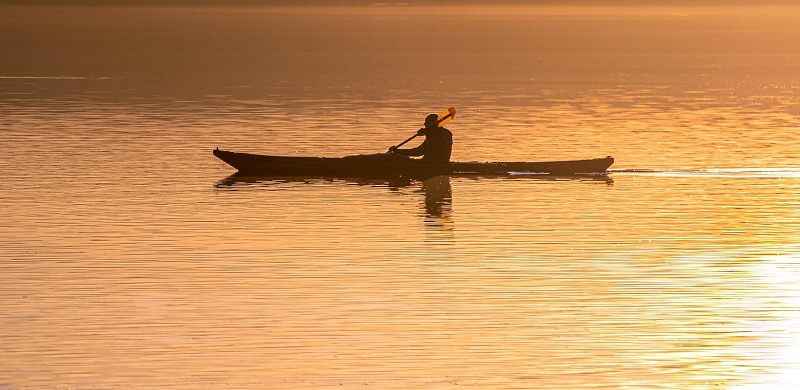
It was a canoe, carefully carved from a single tree trunk.
After scientific radiocarbon testing, researchers estimated that the canoe was about 8,000 years old, dating to around 6000 BC. Today, the Dufuna Canoe is recognised as the oldest known canoe in Africa and one of the oldest surviving boats ever discovered anywhere in the world.
Think about that for a moment.
The Great Pyramid of Giza in Egypt was built around 2560 BC. This means the Dufuna Canoe had already existed for more than 3,000 years before the first stone of the Great Pyramid was laid.
When I first learned this, I asked myself a simple question:
Why don’t more people know this?
If people living in what is now northern Nigeria were building functional watercraft 8,000 years ago, then what else has Africa contributed that many of us have never been taught?
The Dufuna Canoe did not appear by accident. Someone designed it. Someone selected the tree. Someone understood how to carve it. Someone knew how rivers and water worked. Behind that canoe was knowledge, skill, experience, and a community that had learned to survive and grow.
Scientists believe the canoe was used during a period when northern Nigeria had more rivers and lakes than it has today. This period is known as the African Humid Period, when much of the Sahara was greener and supported larger human settlements.
To me, this discovery tells a bigger story.
It reminds us that Africa was never an empty land waiting for civilization. Long before modern nations were formed, people across Africa were building communities, creating tools, solving problems, and passing knowledge from one generation to another.
The Dufuna Canoe is only one example.
Nigeria was also home to the Nok Civilization, one of Africa’s earliest known civilizations. The Nok people produced remarkable terracotta sculptures over 2,000 years ago. Archaeological evidence also shows that they practised iron working, making them one of the earliest known iron-working societies in West Africa.
Further south, the Kingdom of Benin became famous for its bronze artworks, skilled craftsmen, organised government, and well-planned city. When European visitors arrived centuries ago, many wrote about the beauty and organisation of Benin City.
Across West Africa, the great empires of Ghana, Mali, and Songhai became powerful centres of trade, education, and leadership. The city of Timbuktu attracted scholars from different parts of the world and became known for learning, books, mathematics, law, medicine, astronomy, and theology.
These stories do not take anything away from Europe, Asia, or any other civilization.
Instead, they complete the story of humanity.
Every civilization has made valuable contributions, and Africa deserves to be remembered as part of that shared history.
Africa in God’s Story
As a Christian, I believe history is incomplete if we ignore what the Bible tells us.
Africa was not forgotten in God’s plan.
When famine struck, Abraham travelled to Egypt (Genesis 12).
Joseph became a ruler in Egypt (Genesis 41).
Moses grew up in Pharaoh’s palace before leading Israel out of Egypt.
When King Herod wanted to kill the baby Jesus, God instructed Joseph in a dream:
“Get up,” he said, “take the child and his mother and escape to Egypt.” (Matthew 2:13)
Africa became a place of safety for the Saviour of the world.
Later, Simon of Cyrene, a man from North Africa, carried the cross of Jesus on His way to Calvary (Mark 15:21).
In Acts 8, an Ethiopian official heard the Gospel, believed in Jesus Christ, and was baptised, becoming one of the earliest recorded African Christians.
These are not just Bible stories.
They remind us that Africa has always been part of God’s work in history.
Why This Matters
I am not writing this article to say Africa is greater than any other continent.
That is not my purpose.
My purpose is to encourage people to look at Africa with fresh eyes.
History should not be used to compete.
History should help us understand one another.
The Dufuna Canoe is more than an old boat buried in the ground.
It is evidence that innovation, intelligence, creativity, and human development have deep roots in Africa.
Perhaps Africa’s greatest problem is not that it has no history.
Perhaps it is that too much of its history has remained untold.
I believe the truth honours God.
And when we honestly study history, we discover that God’s hand has been at work among all peoples and nations including Africa.
Maybe it is time the world heard more of that story.
References
Breunig, Peter. The Dufuna Canoe: An Early Holocene Boat from Nigeria. African Archaeological Review, Vol. 13 (1995), pp. 223–231.
UNESCO. General History of Africa. UNESCO Publishing.
National Commission for Museums and Monuments (Nigeria).
British Museum. The Kingdom of Benin and the Benin Bronzes.
Hunwick, John O. Timbuktu and the Songhay Empire. Brill Academic Publishers.
The Holy Bible: Genesis 12; Genesis 41; Matthew 2:13–15; Mark 15:21; Acts 8:26–39.
RELATED TOPIC